
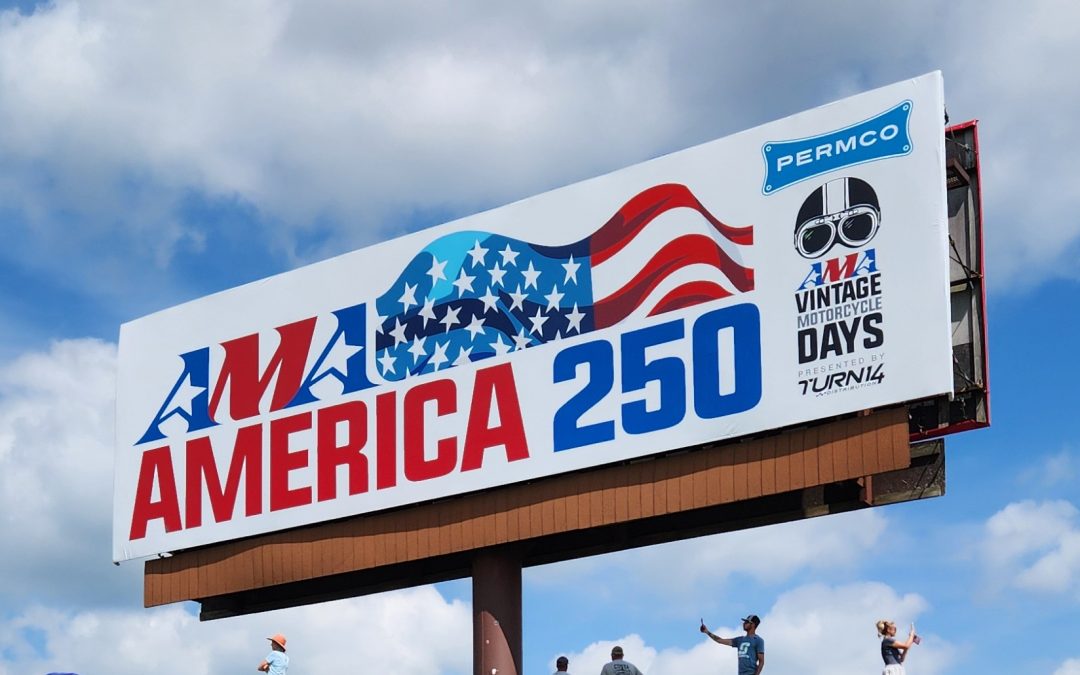
On Saturday, I returned to the AMA’s Vintage Motorcycle Days held at Mid-Ohio Sports Car Course.
This event is featured in the first chapter of my book, Behind the Glass.
Just a few years ago, I walked these same grounds without understanding what was happening inside my body. I didn’t know I was living with PTSD. I had no language for the experience. I only knew that I felt broken…and I couldn’t explain why.
My senses were on high alert. I was hypervigilant. Every sound seemed amplified. The crowd felt threatening. My nerves were shot. I felt like I was crawling out of my skin. I was impatient, short-tempered, and unable to carry on normal conversations. I couldn’t leave fast enough.
At the time, I didn’t understand my reaction. I wanted the feeling to go away, but I didn’t know how or what to do.
Now I understand what was happening. My nervous system was doing exactly what it had been trained to do after trauma: protect me.
Yesterday was different.
I’m not going to pretend it was peaceful. Vintage Days is still loud, busy, dusty, and chaotic. Thousands of people, constant movement, engines, announcements, conversations—it isn’t exactly a meditation retreat.
But my body responded differently.
I wasn’t scanning every person who walked by. I wasn’t counting the minutes until I could escape. I wasn’t emotionally exhausted before lunch. I could have conversations. I enjoyed the company of the people I was with.
You might say, I experienced the event instead of simply surviving it. That is huge to me.
Healing isn’t always dramatic. Sometimes it’s only visible when you return to a place that once overwhelmed you and discover your body no longer tells the same story. It feels like a major win!
And even though it felt like a victory, there was one thing that weighed on me.
Throughout the day I overheard story after story about drinking—people laughing about blacking out, not remembering the night before, losing coordination, drinking until they couldn’t function.
Before I started this journey, I probably would have laughed along. It was normal. That’s the culture many of us grew up in and I have my share of out-of-control drinking stories, too.
But on Saturday, those stories made me sad.
Since removing alcohol from my own life, I’ve spent countless hours learning what alcohol actually does to the brain and nervous system. I’ve learned how it stresses organs, disrupts brain function, increases anxiety, contributes to life-threatening diseases, and wreaks havoc on the digestive system. A blackout isn’t just the loss of memory, it’s evidence that a rapid rise in blood-alcohol level temporarily shut down one of your brain’s essential functions.
Once you understand the science, it’s difficult to hear those stories the same way.
Not because you think you’re better than anyone else. Because you realize how many people are unknowingly causing serious harm in the name of fun and celebration. That’s the heartbreaking part.
Vintage Days reminded me of something important.
Healing doesn’t just change how you feel. It changes how you see. I walked through the same gates, on the same grounds, surrounded by the same environment that once sent my nervous system into overdrive. But I wasn’t the same person who had walked there years before.
That’s what recovery looks like.
Not perfection. Not the absence of stress. Just a nervous system that finally knows it’s safe.
And maybe that’s the greatest gift healing has given me—not that the world became less chaotic, but that my body no longer believes it has to fight its way through it.
 English